DeFi & governance
Collateral liquidation
A protocol sells or seizes collateral when health crosses a threshold.


Research · History · Reference
438 · Articles and references
A protocol sells or seizes collateral when health crosses a threshold.
An attacker publishes a malicious version through a legitimate package account.
Liquidity, prices and pool rules
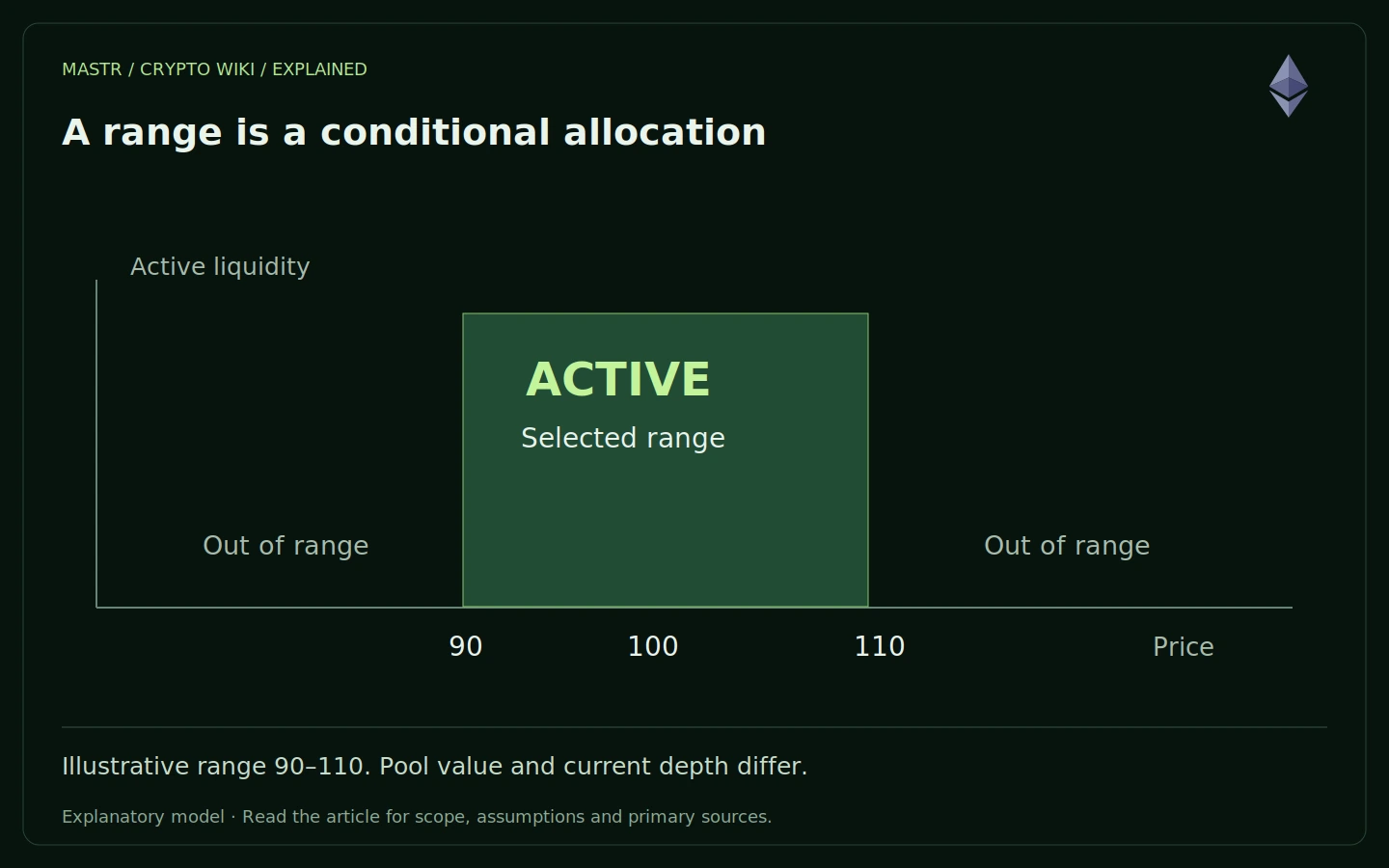
A pool can hold substantial value while only part of its capital supports the current price.
The capital recorded in a pool is not necessarily available around the current price.
A confirmation places a transaction in a block; consensus may replace recent blocks.
A pool equation makes the execution price depend on the size of the trade relative to available reserves.
Protocols can inherit risk through collateral, liquidity and shared counterparties.
A browser-enforced policy can reduce injection exposure, but its actual directives determine the protection.
Persistent values occupy locations interpreted by implementation code.
Code executes, but balances, permissions and configuration survive in the contract's storage.
Authentication can depend on a small browser-held identifier rather than a repeated password entry.
MASTR's watchlist separates provider snapshots, historical performance and unverified social claims.
Followers receive later fills, different sizes, fees and liquidity than the displayed leader.
Understand why an API can fail in a browser yet remain reachable, and why removing a CORS error can create a different problem.
Independent chains can communicate while retaining different validator and governance risks.
A token copies a major stablecoin name without the issuer's contract or redemption claim.
Cream Finance experienced several exploits involving lending markets and integrated assets.
A predictable address commits to deployment inputs. It does not tell you that the resulting application is safe.
Deployer, treasury, fee and liquidity wallets can be separate addresses under related control.
Destination effects depend on messages accepted from another system.
Organised groups combine social engineering with controlled investment interfaces.
A caller claiming to be a bank or authority orders cash deposited into a crypto ATM.
New Zealand exchange Cryptopia suffered a 2019 security breach and later entered liquidation.
Several Curve pools were exploited in 2023 after a compiler issue affected protections in specific Vyper versions.
Keys, devices, recovery and withdrawal rights belong in the same decision.
A custodian lends, pledges or invests assets customers expect to withdraw.